
About the project
The project rests on the cooperation of ZRC SAZU and HUN-REN Centre for Economic and Regional Studies (HUN-REN KRTK) and funded by the ARIS (Slovenian Research and Innovation Agency, Slovenia) and NKFIH (National Research, development and Innovation Office, Hungary). The work lasts 3 years (2025.01.01.-2027.12.31.).
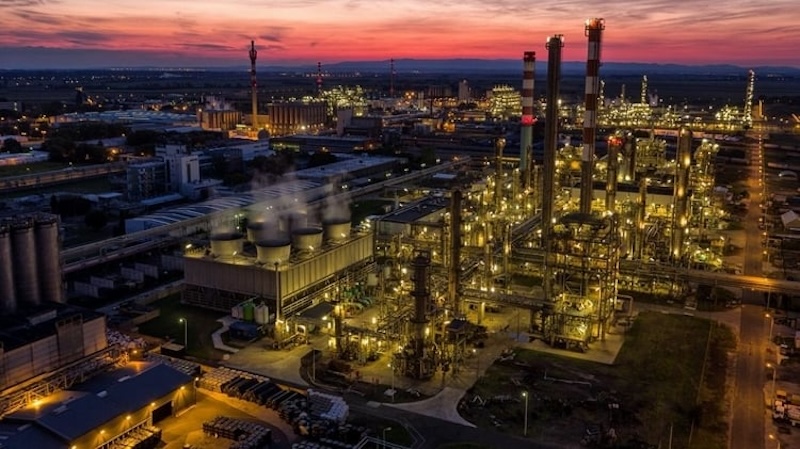
The project aims to understand more of the structural conditions and the interplay of local and non-local agency in the development of small towns which are located outside major urban agglomerations, yet have a substantial share in industrial employment and output (disproportional to their population), and their economy is embedded in global production network. Our intention is to use these ‘hidden industrial champion towns’ as models to explore how human agents in local communities can transform socio-spatial disadvantages (peripheral location, small population and limited access to labour and services) into advantages that are used for new development paths or stabilizing old ones. It is important to know how different external conditions (i.e. national policies and macroeconomic structures) which are different in Slovenia and Hungary, influence the actions of agents and local communities and lead to different development outcomes. The project relies on a combined methodology to reveal and classify path development of small towns, discover agency (strategies, assets, struggles) behind the change or maintenance of industrial paths, how local communities relate to such processes and what narratives are driving current processes (semi-structured expert and narrative interviews, a questionnaire survey, and statistical and narrative analysis) in three case study towns in both countries conducted along a shared methodology. We also endeavour to build up networks locally to discuss our results and support communities and to channel local voices in national policy making. Moreover, it is our ambition to develop a European network of academics focusing on small towns.
Progress report:
Participants
The Hungarian team
Dr. Erika Nagy, PI; senior researcher, CERS Institute for Regional Studies, Békéscsaba, publications
Dr. Ernő Molnár, associate professor, Department of Social Geography and Regional Development University of Debrecen, publications
Dr. Gábor Nagy, senior researcher, CERS Institute for Regional Studies, Békéscsaba, publications
Dr. Gábor Pirisi, associate professor, head of department, Dept. of Human Geography and Urban Studies University of Pécs, publications
Dr. Gergely Tagai, research fellow, CERS Institute for Regional Studies, Békéscsaba, publications
The Slovenian team
Case studies
Events
- The first ’offline’ (in-person) workshop organised by the ZRC SAZU team took place in Ljubljana. The discussion was focused on reviewing the quantitative stage of the project, including data base development, shared analytical framework and methodology (WP1, SO 1.1). The team also agreed on the structure of the historical overview of industrial paths comparatively, and the milestones of the publication strategy. To ground the planned field work in case study towns, the team visited Idrija, a small town impacted by substantial industrial restructuring which was shaped by two locally embedded, powerful ‘hidden champion’ companies.

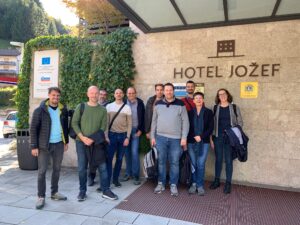
- Three members of the research team, David Bole (Geografski Inštitut Antona Melika ZRC SAZU), Ernő Molnár (Debreceni Egyetem), and Erika Nagy (ELTE KRTK RKI) were invited to the workshop Future Sustainability Transition Pathways for Central and Eastern European Regions organised by the University of Ostrava, Department of Human Geography and Regional Development. The interactive event focused on discussing the transition of CEE industrial regions, related social and environmental conflicts, moreover, on policy and community responses. The meeting ended by a joint agreement on developing a network of academics exploring paths of industrial restructuring in the region.
https://www.instagram.com/p/DP7Iy7fDed9/

Publications
- The project results have been introduced and discussed at the 12th Conference of Hungarian Geographers (Szeged, 2025. szeptember 18-21.)
The papers were given at the event:
Erika Nagy: Socialist industrial towns in transition: Path dependence and local agency
Gábor Nagy, Ernő Molnár, Gábor Pirisi, Gergely Tagai, Erika Nagy: Current trends of peripheral industrialization and the changing patterns of small town-centred commuting
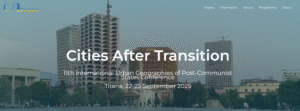
https://mfk2025.hu/#brxe-pwtsbp - The project team organised a session at the Cities after Transition (CAT) conference (Tirana, 2025. szeptember 22-25.) focused on The transitions and variegated paths of industrial towns in Eastern Europe (Session 20). All together, 6 paper were given in the session, 3 of them delivered by team members
Gábor Pirisi: Rebranding Komló? Opportunities and limits in the transformation of a former mining town
Erika Nagy: New path, new dependencies? The entanglement of local and non-local agencies in a former socialist industrial town in Hungary
Gábor Nagy: The current trends of peripheral industrialization and the changing patterns of small town-centred commuting
https://cat2025tirana.com/programme/

- Two team members (Erika Nagy, Gábor Nagy) participated in the conference organised by the Aleksanteri Institute, University of Helsinki titled Extremisms. Ambiguities, Ideologies, Agency (Helsinki, 2025. október 22-24.).
The paper delivered: Is centrally controlled industrialisation (only) a state socialist scheme for regional development and political control? The entanglement of peripheral industrialisation and the rise of the authoritarian regime in post-2010 Hungary
https://www.helsinki.fi/en/conferences/extremisms-ambiguities-ideologies-agency/programme


Dissemination/Disszemináció
Publications/Publikációk
- Nagy Gábor, Molnár Ernő, Pirisi Gábor, Nagy Erika (2025): A helyi munkaerőpiacok hosszútávú átalakulása a kis- és középvárosokban az ingázási adatok tükrében. In: Hermann, Zoltán; Czaller, László (szerk.) Munkaerőpiaci tükör, 2025 : a munkaerőpiac területi egyenlőtlenségei. Budapest, Magyarország : ELTE Közgazdaság- és Regionális Tudományi Kutatóközpont (2025) 296 p. pp. 127-135. , 9 p.
- Nagy, E., Kozma, G., & Molnár, E. (2026): Strategic coupling in the European (global?) periphery: Debrecen as an emerging location of the automotive industry. Progress in Economic Geography, 100070. https://doi.org/10.1016/j.peg.2026.100070
- Molnár E. (2025): Városi gazdaságok a népszámlálások foglalkoztatási adatai tükrében: Jász-Nagykun-Szolnok vármegyei helyzet országos kitekintéssel. Lámpás 14 (4): 48–55.
- Molnár E., Szabó K. (2026): Térszerveződés Jász-Nagykun-Szolnok és Békés vármegyék határvidékén. Lámpás 15 (1): 55–61.
- Molnár E., Lénárt V. M. (2026): Újraiparosodás: a vidéki kisvárosok gazdasági megújulásának egyik lehetséges útja? Lámpás 15 (2): 34–40.
- Molnár E. (2026): Kiegészítő gondolatok a vidéki kisvárosok iparáról – mezőtúri nézőpontból. Lámpás 15 (3): megjelenés alatt.
- Molnár E., Pirisi G., Lénárt V. M. (2026/2027?): Kisvárosi népességdinamikák az (újra)iparosodási folyamatok tükrében. Településföldrajzi Tanulmányok (2026/2027?): megjelenés alatt.
- Nagy E., Pirisi G., Nagy G., Tagai G., Molnár E. (2026): Industrial restructuring and labour dynamics beyond metropolitan spaces: Understanding uneven development through path change in small towns in the era of multiple transitions. Tér és Társadalom, 40(3) https://doi.org/10.17649/TET.40.3.3745 (Forthcoming)
- Pirisi, G., Máté, É., and Trócsányi, A. (2026): The Economic Significance of Small Towns in Hungary: In Light of Reindustrialization. European Spatial Research and Policy 33 (1): 57-78. https://doi.org/10.18778/1231-1952.33.1.10
Conferences/Konferenciák
2025, nemzetközi/International:
- 11th Cities after Transition Conference, University of Tirana, 22-25th September 2025. The team organised a session ‘The transitions and variegated paths of industrial towns in Eastern Europe” (Session 17). https://cat2025tirana.com/catference-2025-3rd-circular/
Papers given by the team members:
- Gábor Pirisi, Norbert Pap, Péter Merza: Rebranding Komló? Opportunities and limits in the transformation of a former mining town
- Erika Nagy: New path, new dependencies? The entanglement of local and non-local agencies in a former socialist industrial town in Hungary
- Gábor Nagy: The current trends of peripheral industrialization and the changing patterns of small town-centred commuting
- Ernő Molnár: ‘The Local Aspects of GPN Integration: A Tale of Two Hungarian Towns’. Annual conference of Regional Studies Association, 2025, Porto. https://www.regionalstudies.org/events/rsa25/
- Gábor Pirisi: Reindustrialisation of Small Towns in Hungary: A way to Economic Resilience? Annual conference of Regional Studies Association, 2025, Porto.
- Erika Nagy, Gábor Nagy: Is centrally controlled industrialisation (only) a state socialist scheme for regional development and political control? The entanglement of peripheral industrialisation and the rise of the authoritarian regime in post-2010 Hungary. Alekstanteri Conference on ‘Extremisms: Ambiguities, Ideologies, Agency’, University of Helsinki, 22-24th, October, Helsinki
Ernő Molnár and Erika Nagy participated at the international workshop ‘Future Sustainability Transition Pathways for Central and Eastern European Regions’, at Ostrava University, 16- 17th October, 2025.
2025, hazai/National:
XII. Magyar Földrajzi Konferencia (2025. 09. 18-21. – Szeged)
- Nagy Erika: Átalakuló szocialista iparvárosok. Útfüggőség és helyi érdekközösségek. Magyar Földrajzi Konferencia, Szeged, 2025 szeptember
- Az autóipar átalakuló földrajza Magyarországon – Molnár Ernő, Mészáros Márk, Kiss-Polgárdi Tamás Magyar Földrajzi Konferencia, Szeged, 2025 szeptember
- A lakáspiaci ciklusok területi és városi típusai – Nyertesek és vesztesek Magyarországon – Nagy Gábor Magyar Földrajzi Konferencia, Szeged, 2025 szeptember
- The industrialization of small towns – a driver of uneven development in the European periphery? – Molnár Ernő, Nagy Gábor, Piris Gábor, Tagai Gergely Magyar Földrajzi Konferencia, Szeged, 2025 szeptember (angol nyelvű szekcióban: ENVIRONMENTAL AND SOCIAL PROBLEMS AND CHALLENGES)
XXIII. MRTT Vándorgyűlés és Konferencia (2025. 10. 30-31. – Veszprém)
- szekció: Peripheral(?) industrialization in Central and Eastern Europe: Changing paths and socio-spatial implications at local and regional scale Session organizers: Erika Nagy; Ernő Molnár
- Gohari, Azadeh; Nagy Erika; Nagy Gábor: Commuting patterns and changing marginalities
- in Jász-Nagykun-Szolnok County, Hungary, Veszprém, MRTT 2025 október
- Pirisi Gábor, associate professor, University of Pécs: In the Shadow of the Mecsek Hills? Reindustrialization Tendencies and Results in the Small Towns of Baranya County
- Molnár, Ernő: Peripheral industrialization in rural small towns: the story of a survivor firm. „Turbulent times, regional challenges” Hungarian Regional Science Association 23rd Annual Meeting; Veszprém, 30-31 October 2025
- szekció: A gazdasági kohézió mozgatórugói? Technológiai trendek, stratégiai iparágak és globális tőkebefektetések ma és holnap
- Molnár Ernő hozzászólása és térképek Molnár Ernő, Mészáros Márk, és Kiss-Polgári Tamás „Az autóipar átalakuló földrajza Magyarországon” c. kutatásából
2026, nemzetközi/International
The team organised a session ’(Re)industrialization and Social Dynamics in the Non-metropolitan Spaces of Central and Eastern Europe’ (session 38) at the Regional Studies Association Annual Conference, Gothenburg, June, 2026. 09.
The team members presented papers:
- David Bole: Successful Firms, Successful Towns? Mapping and Explaining the Relationship between Hidden Champion Firms and Local Socioeconomic Dynamics in Slovenia
- Ernő Molnár: Population Dynamics of Small Towns in the Context of Peripheral Industrialization
- Erika Nagy, Gábor Nagy: Peripheral Industrialization, Changing Mobilities, and New Patterns of Lock-in: Grasping State Agency in the Production of Socio-spatial Inequalities in the Post-GFC Accumulation Regime
Team members presented papers at 12nd The Role of the State in Varieties of Capitalism (SVOC) conference’New Perspectives on (New) Industrial policies in the Era of Geoeconomic Shifts’, Budapest, June 2026:
- Erika Nagy: Municipal agency in a changing multilevel polity. Diverse pathways in the eastern industrial periphery of Europe
- Ernő Molnár: Regional embedding of transnational companies in an emerging CEE automotive location: The case of Debrecen – bár debreceni a téma, a regional embedding-nek akár kisvárosi aspektusai is lehetnek
2026, hazai/National:
A XXII. Településföldrajzi Konferencián elhangzott előadásaink:
- Pirisi Gábor: Funkcionális várostérségek – diszfunkcionális kisváros-térségek? Kisvárosi terek Magyarország térszerkezetében
- Tagai Gergely, Nagy Gábor: Hogyan differenciálja a kisvárosi hálózatot az újraiparosítás? A gazdasági teljesítmény, mobilitás, társadalmi átalakulás, lakhatás dimenzióiban.
- Molnár Ernő: Kisvárosi népességdinamikák az (újra)iparosodási folyamatok tükrében
- Pirisi Gábor: „Rejtőzködő bajnokok” a kisvárosi újraiparosodásban – Mennyiben rejtőzködők? Mennyiben bajnokok?
- Nagy Erika: Változó önkormányzati szerepek a helyi gazdaságfejlesztésben Kelet-közép-Európában
XIV. TÁJTÖRTÉNETI TUDOMÁNYOS KONFERENCIA: TÁJAT TEREMTŐ TÖRTÉNELEM
Pécs, 2026. február 5–6. MTA Pécsi Területi Bizottság
- Pirisi Gábor: Komló rebranding II. – Komló lehetőségei a Mecsek Geopark létesítésében