


2027 International conference
SUSTAINABLE DEVELOPMENT OF MIDDLE-SIZED CITIES AND URBAN REGIONS IN CENTRAL-EUROPE
Győr, Hungary
April 8 th to 10 th 2027
SUSTAINABLE DEVELOPMENT OF MIDDLE-SIZED CITIES AND URBAN REGIONS IN CENTRAL-EUROPE
The category of medium-sized cities is one of the most complex and, from a methodological standpoint, constantly debated areas in geography, regional science, or urban studies. Although population-based definitions vary widely (from 50,000 to as many as 1 million people), modern research increasingly emphasises functional relationships rather than demographic indicators. In the European context, medium-sized cities are not independent entities but rather the centres of their urban regions and agglomerations; as key players in polycentric networks, they fundamentally shape regional development and the mitigation of territorial inequalities.
Will the 21st century bring about the rise of mid-sized cities? While the growth of metropolises is often accompanied by overcrowding and environmental strain, mid-sized urban areas have the potential to become new hubs of sustainability, quality of life, and economic resilience. Our conference focuses on the “invisible majority”: those urban areas where nearly half of Europe’s population lives, yet which are often overlooked by development policy.
The conference aims to compare Central European experiences with international trends. In Central Europe, mid-sized cities exhibit a unique duality. While they are significant in terms of population, their functional strength is greatly influenced by whether a given country has a monocentric or polycentric structure. We will examine why medium-sized cities have remained functionally weak in monocentric systems (such as in Hungary) and what we can learn from more decentralised models (such as those in Germany or the Czech Republic).
The goal of our conference is to explore the 21st-century opportunities facing mid-sized cities – from a sustainable environment to advanced infrastructure – that make these regions attractive destinations for investment and residence. It provides a platform for multidisciplinary discussion of urban regions, polycentric networks, and issues specific to mid-sized cities. We welcome applications from researchers and professionals who analyse, from theoretical or practical perspectives, the urban-network positioning of mid-sized cities, their sustainability issues, their rural connections, and their development trajectories, drawing on European or global experiences.
CONFERENCE VENUE
Győr, Hungary
The conference will be held at the West Hungarian Research Department, Institute for Regional Studies, ELTE Center for Economic and Regional Studies in Liszt Ferenc street 10., H-9022 Győr. The institute is located in Győr’s historical centre.
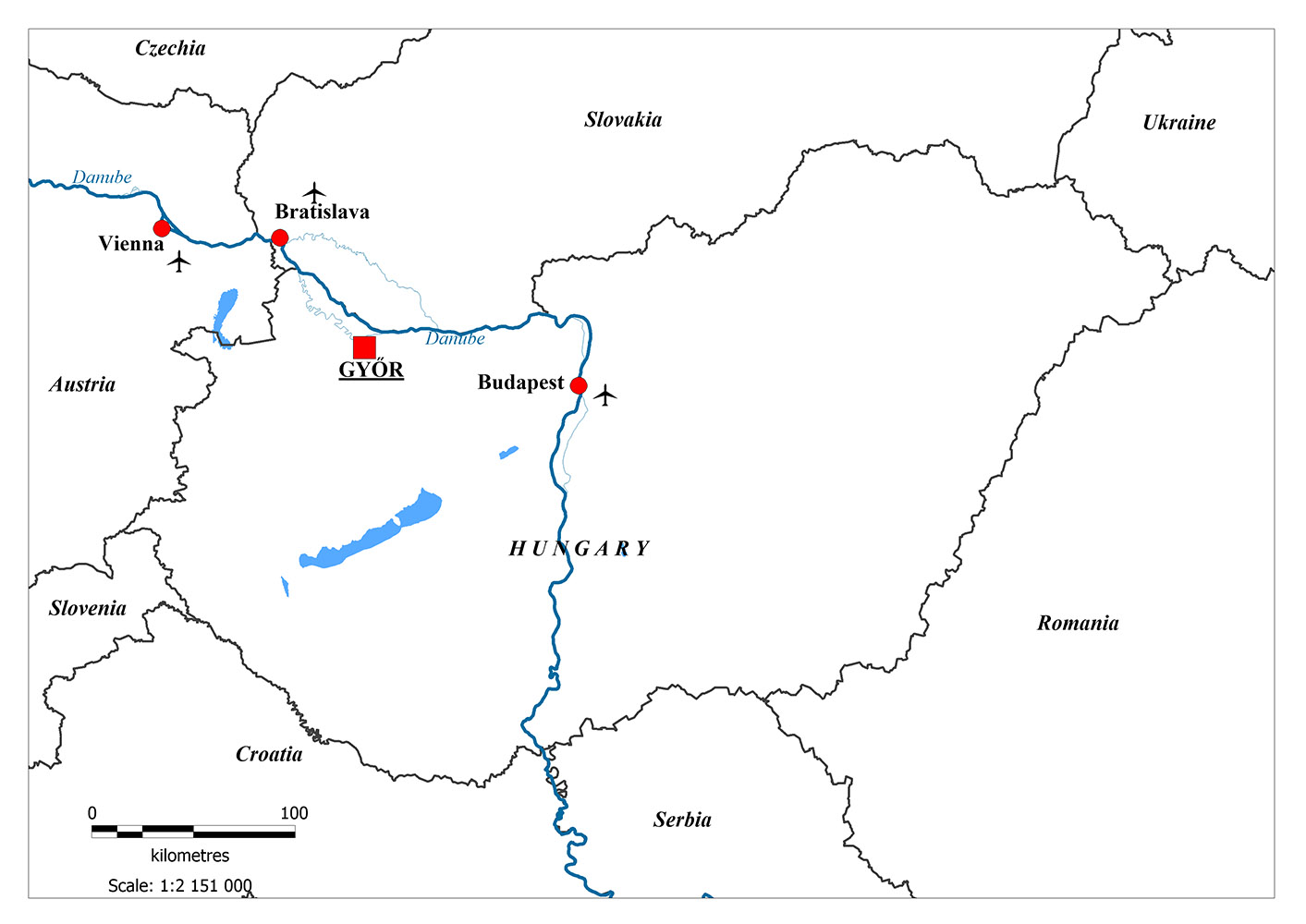
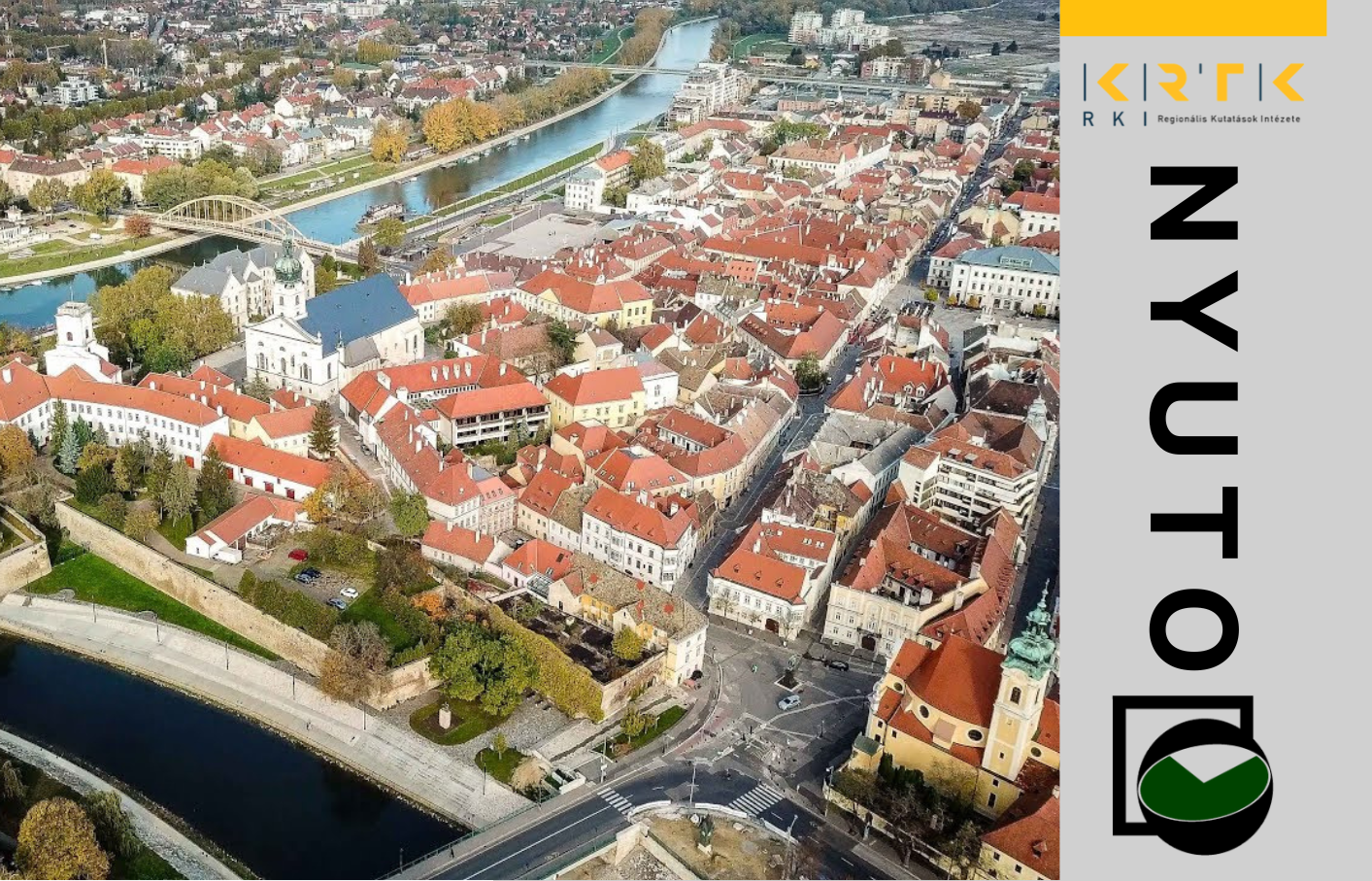
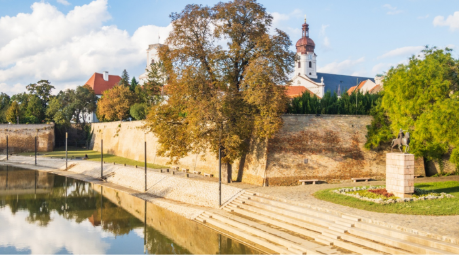
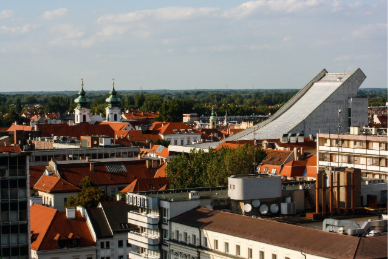
Győr is a historic city located in north-western Hungary, at the confluence of the Danube, Rába and Rábca rivers. With a history dating back to Roman times, the city has developed into one of Hungary’s most important regional centres, combining rich cultural heritage with a strong industrial and innovation profile. The well-preserved Baroque historic centre, the Bishop’s Castle, and the numerous architectural monuments reflect Győr’s significant role throughout Hungarian history. Due to its strategic location between Budapest and Vienna, Győr has long been a key hub for trade, transport, and cross-border cooperation in Central Europe. Today, it is one of Hungary’s leading economic centres, particularly known for its automotive industry, universities, research activities, and international business connections.
Győr is located approximately 120 km from Budapest, Hungary’s capital city, 125 km from Vienna International Airport (Austria), 80 km from Bratislava (Slovakia), and around 150 km from Vienna city centre. Its favourable geographical position within the Vienna–Bratislava–Budapest triangle makes Győr an important gateway between Western and Eastern Europe and a significant centre for regional development, innovation, and international cooperation. Further information on transportation, accommodation, and other practical matters will be available on the website.
IMPORTANT INFORMATION
| DATES | EVENT |
| 1st September 2026 | Opening registration and abstract submission |
| 30st November 2026 | Deadline for abstract submission |
| 15th December 2026 | Notification of paper acceptance |
| 15th January 2027 | Early bird registration closes |
| 31st January 2027 | Deadline for optional full-paper submission for special issue of Romanian Journal of Geography (http://www.geoinst.ro/ ) and other the collaborating journals* |
| 1st March 2027 | Registration closes |
| 8th–10th April 2027 | Conference |
*Space and Society; Hungarian Statistical Review,
Journal of Settlements and Spatial Planning; Journal of Region, Economy and Society; Regional and Business Studies
SCHEDULE
| 8th April 2027 | Arrival of participants |
| 8th – 9th April 2027 | Parallel sessions |
| 9th April 2027 | Half-day excursion in Győr |
| 10th April 2027 | Full-day excursion to the cities and towns of the Austrian–Hungarian border area |
REGISTRATION FEE (without accommodation)
| Registration | Early Bird (EUR) | Standard (EUR) | ||
| From 01.09.2026 to 15.01.2027 |
after 15.01.2027 | |||
| Regular participants | 100 | 150 | ||
| Younger scientists* | 50 | 100 | ||
| Accompanying persons | 50 | 100 | ||
*Young scientists refer to PhD students and other persons aged up 35 years.
Registration fee includes: For regular and young scientists – participation in the conference; conference materials; coffee breaks and lunches; social dinner and half-day excursion. For accompanying persons – dinner an half-day excursion
Full-day excursion is not included.
EXCURSIONS
The conference program includes a half-day excursion. For an extra charge, conference participants may also take part in a full-day excursion.
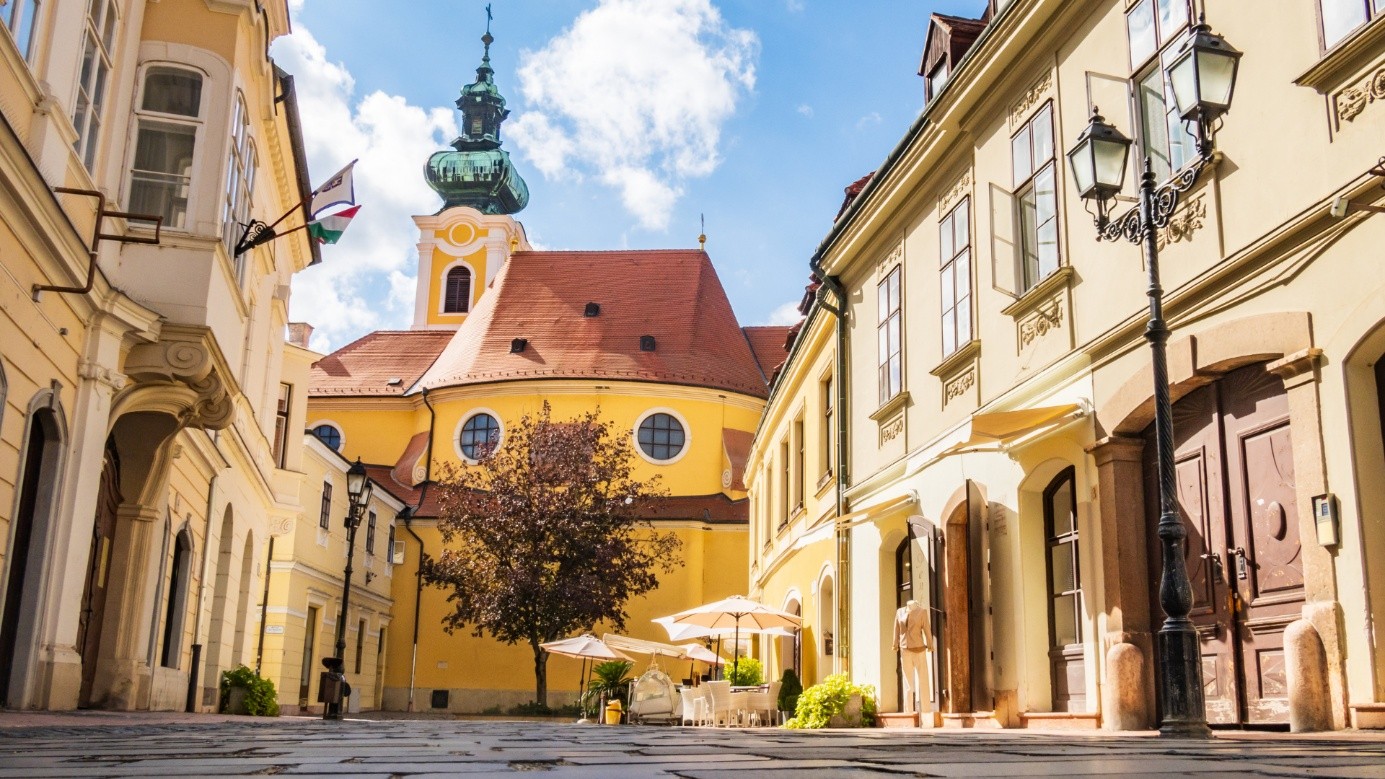
1. Half-day excursion in the down-town of Győr
2. Full-day excursion to Sopron- Eisenstadt (A) – Lake Fertő – Mosonmagyaróvár
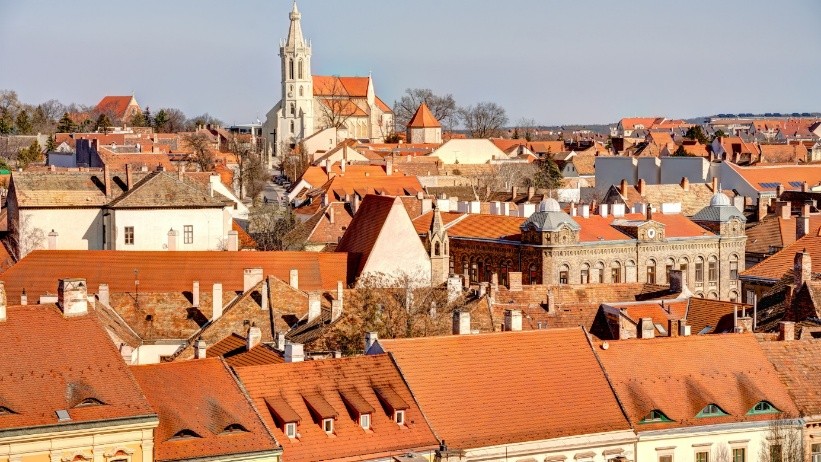 Walking tour in the down-town of Sopron is famous for its remarkably well-preserved medieval Old Town, the iconic Firewatch Tower, and its rich historical heritage. Located near the Austrian border.
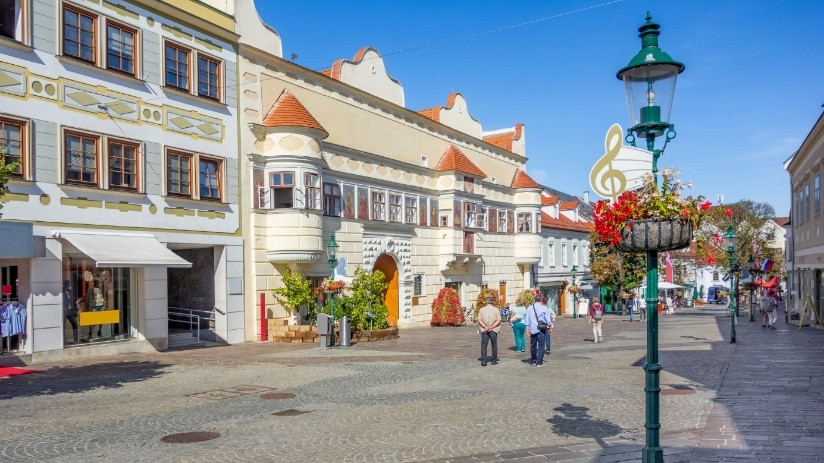 Eisenstadt, the capital of Austria’s Burgenland province, is best known for the magnificent Esterházy Palace and its close association with the composer Joseph Haydn. Its elegant historic center, cultural attractions, make Eisenstadt a popular destination for history, music.
 Lake Neusiedl /Lake Fertő is a unique steppe lake located on the Austria–Hungary border and recognized as a UNESCO World Heritage cultural landscape due to its exceptional natural and cultural values.
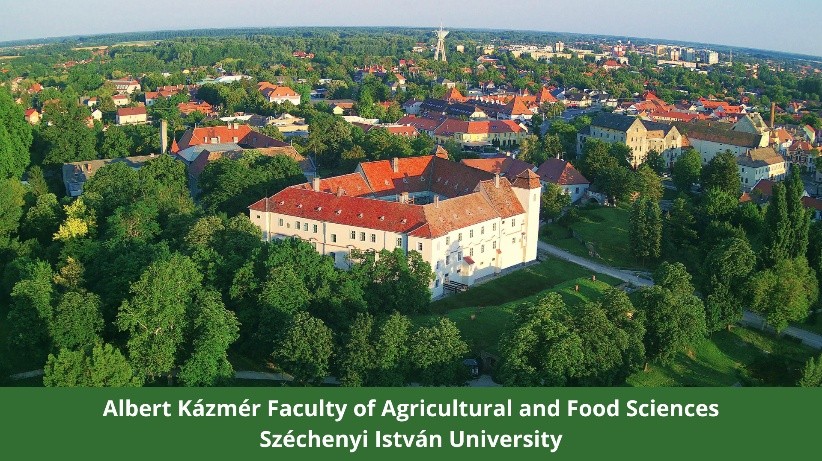 Mosonmagyaróvár is a historic town in north-western Hungary, located near the Austrian and Slovak borders, known for its medieval castle, charming old town, and rich cultural heritage.
INTERNATIONAL SCIENTIFIC BOARD
Jerzy Bański – Professor, Institute of Geography and Spatial Organization, Polish Academy of Sciences, former Chair of IGU CLRD, Poland
Wolfgang Fischer – Professor, Department of Geography and Regional Science, University of Graz, Austria
Ines Grigorescu – PhD, Senior Researcher, Institute of Geography, Romanian Academy, Chair of IGU CLRD, Romania
Tamás Hardi – Professor, ELTE Centre for Economic and Regional Sciences; Széchenyi István University, Member of the Steering Committee of the IGU CLRD, Hungary
Katalin Mezei – Head of Department, Associate Professor, Albert Kázmér Faculty of Agricultural and Food Sciences, Department of Regional Science and Rural Development, Széchenyi István University, Hungary
Bianca Mitrică – PhD, Scientific Secretary of the IGU CLRD, Senior Researcher, Institute of Geography, Romanian Academy, Romania
Radu Săgeată – Professor, Romanian Academy Institute of Geography, Human Geography & Regional Development, Romania
Milada Šťastná – Professor, Head of the Department of Applied and Landscape Ecology at Mendel University, Czechia
Michael Sofer – Professor, Department of Geography and Environment, Faculty of Social Sciences, Bar-Ilan University, Honorary Member of the IGU CLRD, Israel
Viktória Szirmai – Doctor of the Hungarian Academy of Sciences Széchenyi Prize-winning urban sociologist, Editor-in-Chief of City.hu Urban Studies Review, Hungary
Judit Tímár – Senior Researcher, ELTE Centre for Economic and Regional Studies, Hungary
Carmen Vazquez Varela – Professor, Department of Geography and Spatial Planning, University de Castilla-La Mancha, Vice-Chair of IGU CLRD, Spain
ORGANIZING COMMITTEE
Nóra Baranyai – Research fellow, ELTE Centre for Economic and Regional Sciences
Tamás Hardi (co-chair) – Professor, ELTE Centre for Economic and Regional Sciences; Albert Kázmér Faculty of Agricultural and Food Sciences, Department of Regional Science and Rural Development, Széchenyi István University
Boglárka Horváth-Barsi – Research fellow, ELTE Centre for Economic and Regional Sciences; Assistant professor, Albert Kázmér Faculty of Agricultural and Food Sciences, Department of Regional Science and Rural Development, Széchenyi István University
Petra Kinga Kézai (co-chair) – Research fellow, ELTE Centre for Economic and Regional Sciences; Assistant professor, Kautz Gyula Faculty of Economics Széchenyi István University
Marcell Kupi – Research fellow, ELTE Centre for Economic and Regional Sciences; Associate professor, Kautz Gyula Faculty of Economics Széchenyi István University
Katalin Mezei – Associate Professor, Head of Department, Albert Kázmér Faculty of Agricultural and Food Sciences, Department of Regional Science and Rural Development, Széchenyi István University
Andrea Pozsgai – Lecturer, Albert Kázmér Faculty of Agricultural and Food Sciences, Department of Regional Science and Rural Development, Széchenyi István University
Júlia Szőke – Associate professor, Vice-dean, Department of International Studies and Communication, Apáczai Csere János Faculty of Humanities, Education and Social Sciences, Széchenyi István University
Andrea Uszkai – Research fellow, ELTE Centre for Economic and Regional Sciences; Albert Kázmér Faculty of Agricultural and Food Sciences, Department of Regional Science and Rural Development, Széchenyi István University
E-mail: nyutoconf@krtk.hu
The conference is supported by project no. MEC_SZ_156151 titled: „Sustainable development of middle-sized cities and urban regions in Central-Europe” financed by the National Research, Development and Innovation Fund from Hungary.