
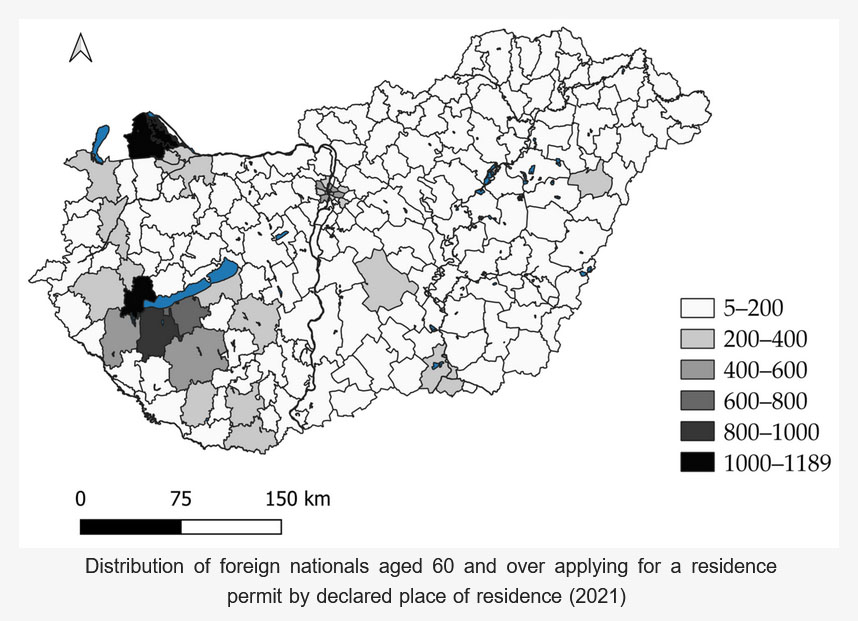
This study examines the transformation of the Balaton region in Hungary from a traditional tourist destination into an international retirement migration destination for older adults from Western Europe. Migration theories and models are applied to illustrate the relationships between migration and development and to explore how tourism, lifestyle aspirations, and socio-economic factors influence the settlement decisions of older migrants. Empirical findings suggest that prior tourism experience can mitigate the uncertainty associated with migration and foster belonging. However, many retirees move to Hungary with limited knowledge of the country, relying on social networks and real estate agents for information. These retired migrants also utilize local services and infrastructure, including healthcare and community spaces, which shape their daily lives and help them integrate into the community. The migration of older adults stimulates the development of peripheral rural areas through real estate purchases, renovations, and small-scale entrepreneurial activities, particularly in the accommodation sector. This challenges the traditional perception of older-age migrants as inactive.
The study is available here: https://www.mdpi.com/2673-5768/7/5/122