Search

hu / en

News

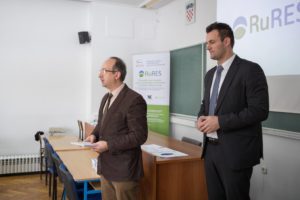
The final conference of the project „Renewable energy sources and energy efficiency in a function of rural development-RuRES”, co-financed by the European Union under the Interreg V-A Hungary-Croatia Co-operation Programme 2014-2020, was held on 17th December 2018 in Osijek (Croatia) at University of Osijek Faculty of Electrical Engineering Computer Science and Information Technology Osijek. Details are available here.
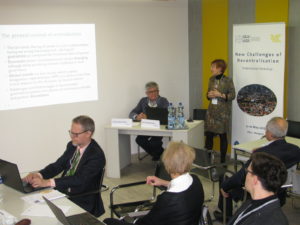
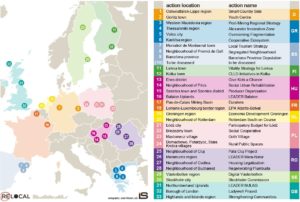
The RELOCAL consortium meeting held on the 9th – 10th of October in Budapest aimed at discussing insights, commonalities, differences and key messages of the first 18 Case Studies already available. Panels and group discussions were meant to help partners in the elaboration of new case studies and finalisation of ones already provided. Two from among the Hungarian case studies were discussed after being reviewed, both were evaluated positively. The event was hosted by the Central and North Hungarian research Department of the Institute for Regional Studies where most of the colleagues who participates in the project are affiliated.
The purpose of the Slovakian-Hungarian INTERREG-project entitled „Smart Communities – Virtual Education and Research and Development and Innovation Network in the Slovakian-Hungarian Border Region” is to raise the level of digital knowledge of members of the local community in the lagging border region, thereby facilitating their access to higher value-added employment opportunities. The prioritised sectors of the project cover training and R+D+I with a focus on sustainability and ICT. These processes are facilitated by the creation of a network of stakeholders of civil society, educational and research institutions, and the organisation of joint professional training programmes and a mentor system in collaboration with the target groups.
We proudly inform our readers, authors and reviewers that Tér és Társadalom, the quarterly journal of the institute was selected for inclusion into Web of Science Emerging Sources Citation Index (ESCI). ESCI indexes around 6000 journals of regional importance and in emerging scientific fields, being constantly evaluated for inclusion in the more prestigious SSCI database. Currently, volumes 30 and 31 (years 2016 and 2017) of Tér és Társadalom are indexed in the database. The editors wish to thank the authors, reviewers and the editorial board for their work, without which this growing international visibility of the journal would not have been possible.
Twenty-five years into transformation, Central and Eastern European regions have undergone substantial socio-economic restructuring, integrating into European and global networks and producing new patterns of regional differentiation and development. Yet post-socialist modernisation has not been without its contradictions, manifesting in increasing social and territorial inequalities. Recent studies also suggest there are apparent limits to post-socialist growth models, accompanying a new set of challenges within an increasingly uncertain world. Aiming to deliver a new synthesis of regional development issues at the crossroads between ‘post-socialism’ and ‘post-transition’, this book identifies the main driving forces of spatial restructuring in Central and Eastern Europe, and charts the different regional development paths which take shape against the backdrop of post-crisis Europe. A comparative approach is used to highlight common development challenges and the underlying patterns of socio-economic differentiation alike. The issues investigated within the Handbook extend to a discussion of the varied economic consequences of transition, the social structures and institutional systems which underpin development processes, and the broadly understood sustainability of Central and Eastern Europe’s current development model. This book will be of interest to academics and policymakers working in the fields of regional studies, economic geography, development studies and policy.
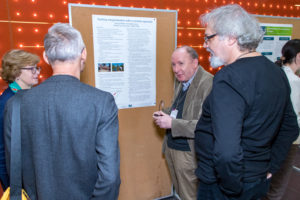
The international conference organised by the Institute of Regional Studies titled „New Ideas and New Generations of Regional Policy in Eastern Europe” was organised in Pécs between April 7-8. Over 150 participants from 15 countries attended the conference, where the successful work was conducted in 8 thematic sessions (socio-economic inequalities, regional policy, cohesion, sustainability, migration, border regions, territorial capital, rural innovations, smart city). A major objective of the event, alongside the presentation of the most state-of-the art results of territorial researches and the debate on current questions was to contribute to strengthening the international relationships of researchers and to encourage new cooperations. The conference was opened by Ádám Török, secretary general of Hungarian Academy of Sciences and Ilona Pálné Kovács director of Institute for Regional Studies. The plenary lectures was presented by excellent scientists as Simin Davoudi, Dominic Stead, Giancarlo Cotella, Gabriel Badescu. The conference presentations and abstracts are available on following link.

2026

Aug

18

M

T

W

T

F

S

S

27

28

29

30

31

1

2

3

4

5

6

7

8

9

10

11

12

13

14

15

16

17

18

19

20

21

22

23

24

25

26

27

28

29

30

31

1

2

3

4

5

6

Next month >

Események

2026

Aug

18

M

T

W

T

F

S

S

27

28

29

30

31

1

2

3

4

5

6

7

8

9

10

11

12

13

14

15

16

17

18

19

20

21

22

23

24

25

26

27

28

29

30

31

1

2

3

4

5

6

Next month >